
How to Reduce Owner Dependency Without the Business Falling Over
Trent West ·
Time to read: 8 minutes.
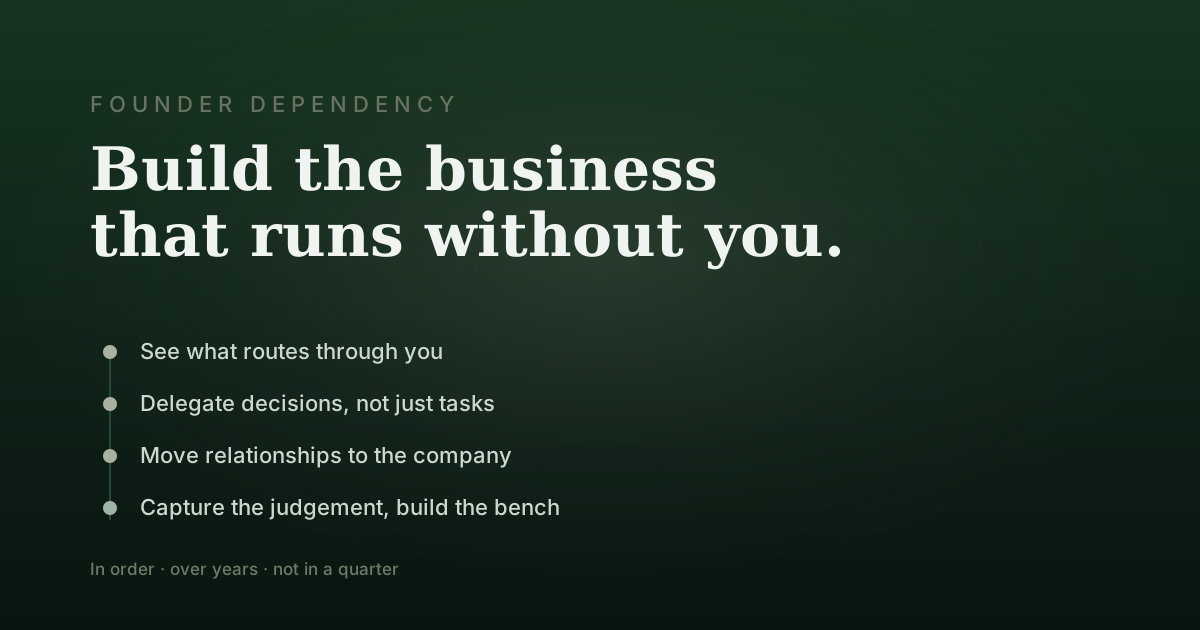
Most owners already know their business leans on them too heavily. The hard part was never the diagnosis. It’s doing something about it without the wheels coming off, because the instinct that built the dependency, being across everything and catching every problem, is the same instinct that makes it so hard to let go. You can’t step back from a business by simply deciding to. You have to build the thing that lets you.
The good news is that this is a process with an order to it, not a personality change. Done in the right sequence it compounds, each step making the next one safer. Done in the wrong order it either fails or frightens you back into the middle of everything. Here’s the sequence that actually works.
Start by finding out what you’re actually holding
You can’t hand off what you can’t see, and most owners genuinely don’t know everything that routes through them, because much of it has become invisible through habit. So the first job is to make it visible. For two weeks, keep a rough log of every decision, approval, and problem that lands on you. Not a formal audit, just a running note.
If you want a quick read before you start, the Owner Dependency Score scores where you sit and what the reliance is worth. At the end you’ll have a list, and it will be longer than you expect. Sort it into three piles. Things only you can do right now because of genuine expertise or relationships. Things that come to you out of habit but that someone else could do today. And things nobody else can do only because you’ve never built anyone who can. That middle pile is where you start, because it’s free. It’s delegation you could do this week at no risk, and clearing it buys you time and proves to the team that handing off works.
Delegate decisions, not just tasks
Here’s where most delegation stops short and quietly fails. Owners hand over tasks, the doing of things, while keeping every decision for themselves. So the work leaves your desk but the thinking doesn’t, and everything still funnels back to you for a yes or a no. You’ve made yourself a bottleneck with extra steps.
Real dependency reduction means handing over decisions, which is harder and feels worse. It means telling someone not just what to do but that they own the call, within limits you set. The way to do it without losing sleep is to give decision rights with a boundary: you can approve anything under $10,000, resolve any customer issue up to a refund of X, hire for any role at this band. Inside the boundary, their call, and you don’t overrule it even when you’d have done it differently. Widen the boundary as they prove themselves. The discomfort of watching someone make a call you’d have made another way is the actual work here, and there’s no version that skips it.
Move the relationships onto the company’s books
The dependency that costs the most at sale, and hurts most if you get hit by a bus, is the relationships that belong to you personally rather than to the business. The big customers who deal with you. The suppliers who give terms because they know you. The referrer who sends work because of a friendship.
These transfer slowly and can’t be rushed, which is exactly why to start early. Bring someone else into the relationship alongside you, on the calls and in the meetings, long before you plan to step out. Let them lead gradually while you’re still there. The goal is that over a year or two, the customer comes to trust the business and the person now running the account, rather than only trusting you. A relationship you hand over cold, in the run-up to a sale, doesn’t transfer. It just leaves.
Write down the judgement, not just the process
Plenty of businesses document their processes and still can’t run without the owner, because what they wrote down is the what and never the why. A procedure that says “price the job using the calculator” doesn’t capture the twenty years of judgement you apply about when to go higher, when to walk away, and when the calculator is wrong. That judgement is the valuable part, and it’s the part locked in your head.
So document the reasoning, not just the steps. When you make a pricing call, a hiring call, a call to fire a customer, write down briefly why, in terms of what you were weighing. Over time that becomes the thing that actually transfers: not a manual of steps, but a record of how decisions get made here, that someone competent can learn from. It’s slower and less satisfying than a flowchart, and it’s the difference between a business that’s documented and one that’s genuinely transferable.
Build the layer that catches the mistakes
All of this requires people who can make real decisions, and building them means letting them make some wrong ones while you’re still there to limit the damage. This is the part owners resist hardest, because your whole instinct is to step in and prevent the mistake. But a manager who’s never been allowed to be wrong has never actually been given the job, and the moment you’re gone they’ll freeze, because they’ve been trained to check with you rather than to decide.
The shift is from being the person who makes the decisions to being the person who builds the people who make the decisions. That’s a genuinely different job, and it often feels like doing less, which is uncomfortable when doing more is how you got here. Reframe it: every mistake a manager makes and recovers from while you’re watching is cheaper than the one they’ll make alone after you’ve gone, and it’s how they actually learn to hold the role.
The honest part
This will feel like making yourself redundant, and some owners stall here for exactly that reason. Redundancy is the point. A business that still needs you is unfinished, and you’re the one trapped inside it. The version that can run without you is the one you can sell at full value, hand to the next generation, or simply take a real holiday from. That’s the whole prize, and it only exists on the far side of being genuinely willing to let go.
None of this happens in a quarter. Building real decision-making capacity, transferring relationships, and capturing judgement is two-to-three-year work, which is precisely why the time to start is well before you need it done. If you want a clear read on where your dependencies actually sit and a sequenced plan to unwind them, that’s core to what a Commercial Assessment surfaces, and the founder dependency work takes it from map to resolved.
Every business has one constraint doing most of the damage.
Find out what's constraining yours →2 questions · 60 seconds · No login