
Your Business Is Getting Exactly the Results It's Built to Produce
Trent West ·
Time to read: 9 minutes.
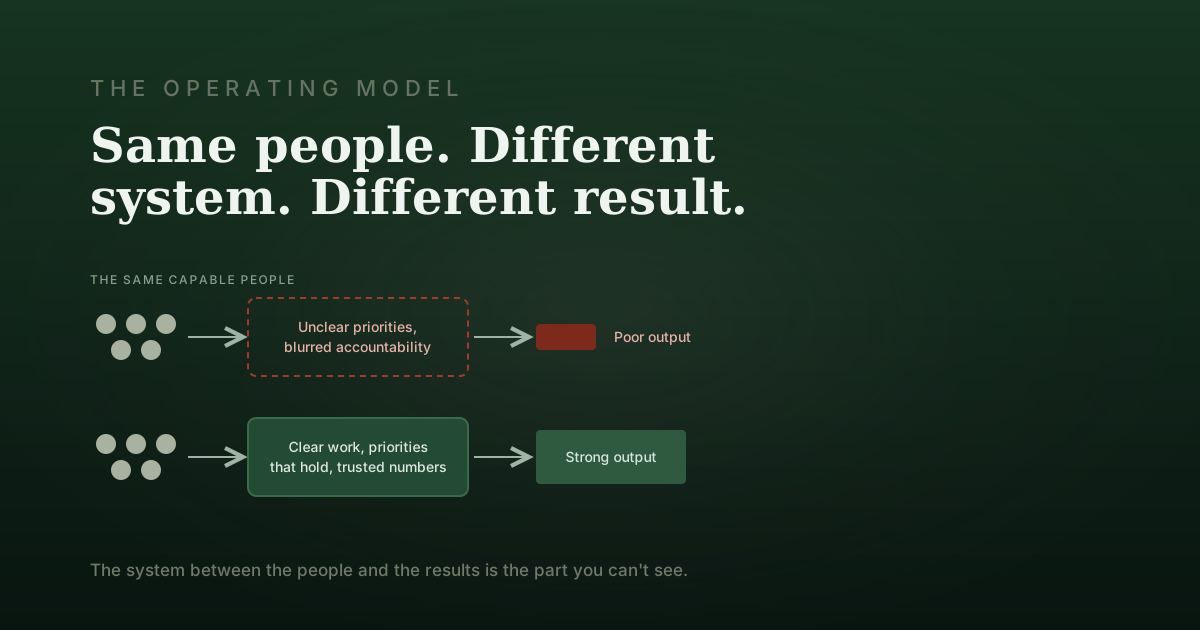
When a business isn’t producing what its owner wants, the diagnosis is almost always some version of “we have the wrong people, or they’re not trying hard enough.” So the owner hires someone stronger, has a run of motivational conversations, reshuffles the reporting lines, and buys a system that promises to fix it. Six months later the numbers look much the same, and the conclusion is usually that the new people also weren’t quite right. There’s a more uncomfortable explanation, and it’s the one that actually leads somewhere: the results you’re getting are the results your business is currently built to produce, not the results your team is capable of.
Output is a property of the system
A business is a system: a particular way that work flows, decisions get made, information moves, incentives point, and hand-offs happen. That system has an output, and the output is remarkably stable regardless of who’s inside it, because the system shapes what any individual can actually achieve. Put a genuinely capable person into a business where priorities change weekly, accountability is blurred, and the information they’d need to make good calls arrives late and wrong, and they will produce mediocre results, not because they’re mediocre but because that’s what the system permits. Put the same person into a business where the work is clear, the priorities hold, and the numbers are trustworthy, and they’ll look transformative. The person didn’t change. The system did.
This is the distinction owners almost never see, because it’s invisible in the ordinary run of things. You can see your people, and you can see your results, so when the results are poor it’s natural to draw a line straight from one to the other. What you can’t see is the system sitting between them, quietly determining how much of your people’s capability actually reaches the output. Capability and output are different things, and the gap between them is the system’s doing.
Why the usual levers don’t move it
Understanding this explains why the four instinctive fixes so often disappoint. Hiring a stronger person drops real talent into the same constraints, and the constraints win; you’ve raised the cost base without raising the output. Exhorting people to try harder assumes the problem is effort, when the problem is usually that effort is being wasted by the way the work is organised, so you get short-lived intensity followed by burnout and turnover. Reorganising the chart moves the boxes without changing how work actually flows between them, so the same hand-offs fail in a new shape. And buying technology automates the existing process, which means if the operating model underneath is unclear, you’ve now made an unclear process faster and more expensive rather than fixing it.
Each of these feels like decisive action, which is exactly their appeal, and each leaves the system that produced the result untouched. A business can run this cycle for years, cycling through good people and expensive tools, without the underlying output ever shifting, because nothing that was changed was the thing setting the output.
How to tell which problem you have
The practical question is how to distinguish a system problem from a genuine people problem, and there’s a reasonably reliable test. Look for results that persist regardless of who occupies the seat. If three different people have held a role and all three eventually produced the same disappointing outcome, the common factor is not the people, it’s the seat and the system around it. Look for how much heroism your normal performance requires: if hitting an ordinary target depends on someone working late, chasing information across departments, and personally holding things together, the system isn’t delivering the result, a person is compensating for the system, and that compensation is fragile and unscalable. And look at where your good people go and how they feel: capable people leaving, or staying and slowly disengaging, is often a signal that the system is grinding them down, not that they lack ability.
The clarifying move, when you can, is to change the system rather than the person and watch what happens. Fix the information, clarify the accountability, unblock the hand-off, and if the results improve with the same people, you’ve found your answer. If they don’t, then you’ve genuinely learned something about the people, and you’ve learned it cleanly, without having fired someone for a problem that was never theirs.
The honest other side
The concession matters, because this idea can be taken too far. “It’s the system” can become a place to hide, a way to avoid every difficult conversation by treating people as blameless outputs of their environment. That’s its own failure. Sometimes the person really is in the wrong role, or doesn’t share how the business is meant to work, and no amount of system improvement will fix a genuine mismatch. Structure explains a great deal, and it does not explain everything, and an owner who blames the system for what is plainly an individual problem is dodging a call they need to make. The discipline is to check the system first, because it’s the larger and more invisible factor, and only then to make the people call with clear eyes, knowing you’re responding to the person and not to the constraints you put around them.
That ordering is the whole point. It’s why a serious diagnosis reads the operating model before it reaches conclusions about the team, and why a people assessment is only safe when it sits next to an honest read of the system those people are working inside. Get the order right and you stop spending money on new talent to run an old machine, and start changing the machine so the talent you already have can finally produce what it’s capable of. That is the work a Commercial Assessment does first, and the APG Platform keeps in view: the business as a system that can be rebuilt to produce a different result.
Every business has one constraint doing most of the damage.
Find out what's constraining yours →2 questions · 60 seconds · No login