
Levers, Outcomes and Constraints: Knowing Which Is Which
Trent West ·
Time to read: 8 minutes.
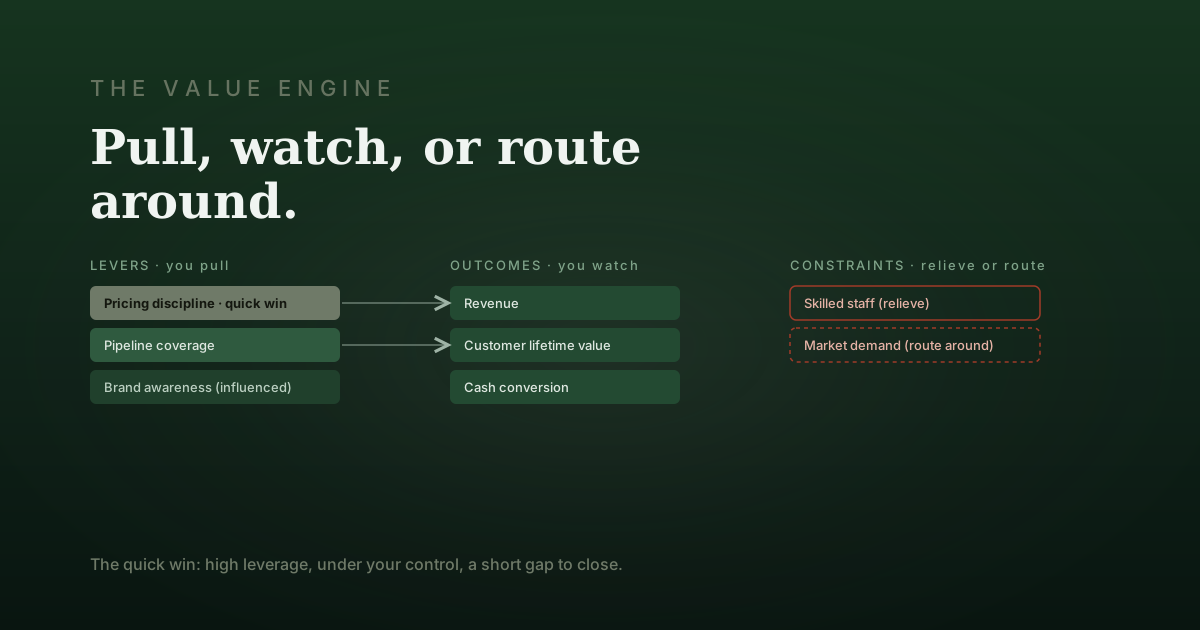
Look at the dashboard of an owner-led business and you’ll see a dozen numbers, all treated the same way: as things to be pushed up. Revenue, margin, retention, utilisation, lead volume, staff turnover, all sitting side by side as if effort applied to any of them works the same way. It doesn’t, and the difference is the single most useful distinction in operating a business well. Some of those numbers you can act on directly. Some of them only move because something else moved, so pushing on them is pushing on a shadow. And some of them are hard limits that cap what any amount of effort elsewhere can achieve. Confuse the three, and you spend enormous energy where it can’t possibly work.
Three kinds of driver
Everything on that dashboard is one of three things. A lever is something you can act on directly: your pricing, your pipeline activity, your onboarding process. Pull it, and it moves. An outcome is a result that changes because levers changed: revenue, profit, customer lifetime value. You can’t push an outcome directly, you can only move the levers underneath it and watch it respond. And a constraint is a limit that caps what the system can produce until it’s relieved: a shortage of skilled staff, a supplier bottleneck, a ceiling on market demand. No amount of pulling levers gets you past a binding constraint, which is why working on anything else while a constraint binds produces no gain at all.
The most common and expensive mistake is treating an outcome as a lever. “Grow revenue by 20%” is not an action, it’s a hope with a number on it, because revenue is an outcome. The businesses that actually grow revenue don’t target revenue, they pull the levers that produce it, pricing, acquisition, retention, and let the outcome follow. A target set on an outcome with no lever named underneath it is a wish, and wishes don’t move dashboards.
Not every lever is one you can pull
Sorting drivers into the three kinds is the first cut. The second is controllability, and it matters most for the levers. Some levers you genuinely control: you can change your pricing on Monday. Some you only influence: your brand’s reputation moves with your actions but also with things outside them. And some are effectively external: you don’t set market demand or the regulatory regime. The distinction is practical, because you can only truly pull the controlled levers. The influenced ones need partners and patience, and the external ones aren’t levers at all in your hands, they’re conditions you plan around. A strategy that depends on pulling a lever you merely influence is a strategy depending on other people’s choices.
Constraints carry their own version of this. A constraint you control, you relieve: hire, invest, redesign the process. A constraint that’s external, like the size of your market or a regulation, you don’t fight, you route around, by changing where you play rather than pushing on a wall that won’t move. Reading a constraint’s controllability tells you whether the move is to fix it or to design your way past it, and confusing those two is how businesses spend years pushing on walls.
Leverage, and the quick win
Among the levers you control, they still aren’t equal, and the difference is leverage: how much moving this one lever moves everything else downstream. A high-leverage lever ripples through the system, improving several outcomes at once; a low-leverage one moves a single number and stops. This is where the real prioritisation lives, and it points at a specific sweet spot. The quick win is the lever that is high in leverage, genuinely under your control, and only a short distance from where it needs to be. High leverage means it matters, control means you can actually move it, and a small gap means you can move it soon. A driver that hits all three is the closest thing a business has to a free lunch, and most businesses have one or two sitting unrecognised on the dashboard precisely because nobody sorted the drivers into kinds.
The honest caveat
The clean three-way split is a simplification of something messier, and it’s worth saying so. A real business is a web of feedback loops, not a tidy row of independent drivers, and the same thing can be a lever in one loop and a constraint in another. Push a lever hard enough and you often create a new constraint somewhere else: win more customers than you can deliver to, and delivery becomes the binding limit. So the typing isn’t a permanent label, it’s a question you keep asking as the system shifts. But asking it at all, of every number you’re tempted to chase, whether you can pull this or only watch it, and whether something upstream is quietly capping it, is what separates effort that compounds from effort that spins.
You can sort your own drivers with the Value Engine Triage tool: type each one as a lever, outcome or constraint, mark how much you control it and how far it is from target, and see your quick wins, the constraints to relieve, and the ones to route around. Once your levers are clear, the Prioritisation Scorecard ranks the work behind them, and a Commercial Assessment builds the whole engine from evidence before the APG Platform tracks each lever against the outcomes it’s supposed to move.
Every business has one constraint doing most of the damage.
Find out what's constraining yours →2 questions · 60 seconds · No login