
How to Prepare Your Business for Sale
Trent West ·
Time to read: 9 minutes.
Most businesses that go to market never sell. The number varies by who’s counting, but a large majority of owner-led businesses put up for sale don’t find a buyer at an acceptable price, and the reason is rarely the price itself. It’s preparation. The business gets listed before it’s ready, a buyer’s due diligence surfaces things the owner never addressed, and the deal either dies or gets ground down to a number the owner won’t accept.
The frustrating part is that almost all of it is avoidable, but not quickly. Preparing a business for sale properly is two-to-three-year work, and the single biggest mistake owners make is starting it far too late, usually when they’ve already decided they want out. By then the runway to fix anything is gone, and you’re negotiating from whatever position the business happens to be in. This is a guide to doing it the other way round.
First, understand what you’re actually selling
A buyer isn’t buying last year’s profit. They’re buying their confidence that the profit keeps arriving after you’ve been paid out and left. Enterprise value is the price the market puts on that confidence, and everything in a sale process is a test of it. Where a buyer finds a clear answer backed by evidence, they pay. Where they find a question you can’t answer, they assume the worst, because that’s the only assumption they can defend.
That single idea reframes the whole exercise. Preparing for sale isn’t about dressing the business up for a year. It’s about systematically removing the reasons a buyer would be less than confident, so the earnings they can see are earnings they believe will last. We’ve laid out how two identical-earning businesses end up worth very different amounts in a worked example, and it’s worth reading alongside this, because it makes the abstract idea concrete.
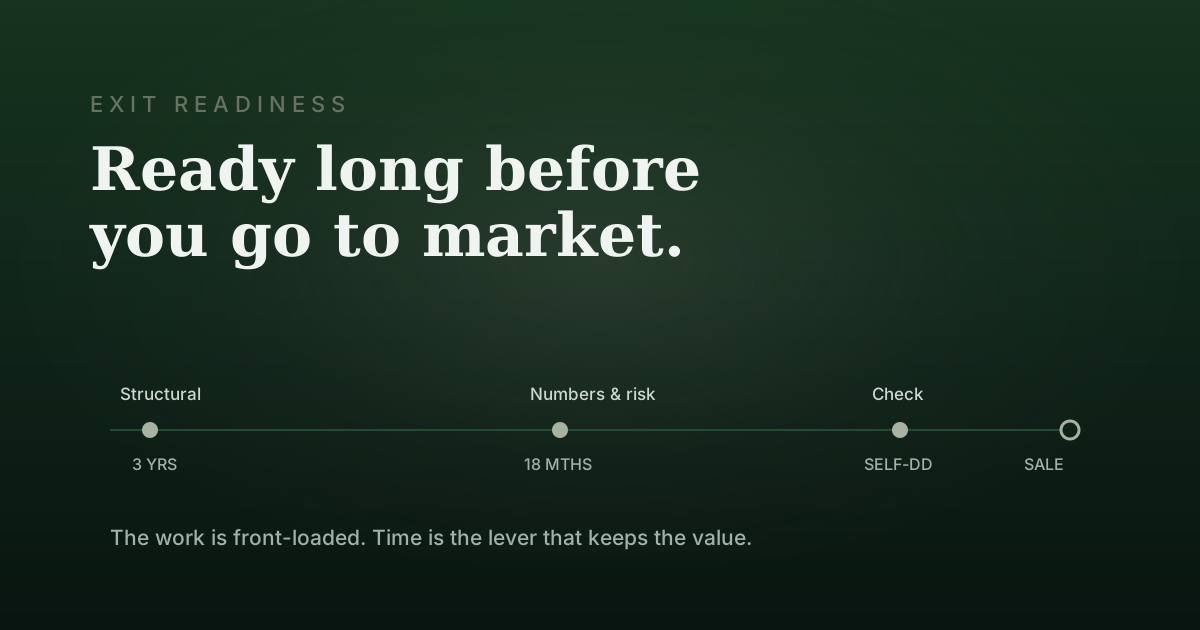
Three years out: fix the structural things
The changes that move value the most are also the slowest, which is why they have to go first. None of them can be faked in the run-up to a sale, and a buyer is specifically looking for the signature of last-minute work.
Reduce your own dependency. A business that can’t run without you gets a material discount, because the buyer isn’t confident it survives your exit. Building a management layer, moving relationships onto the company’s books, and getting the judgement out of your head and into the business is the slowest work of all, which is exactly why it starts now. There’s a full sequence for it in how to reduce owner dependency, and the founder dependency page covers what it costs if you don’t.
Break any growth plateau. A business that has visibly stopped growing gives a buyer little reason to believe next year beats this one, and that caps the multiple. If revenue has been flat for a couple of years, finding and fixing the actual constraint is value-creation work, and it takes time to show up as a trend a buyer can underwrite. More on that in why your business growth has stalled.
Get earnings converting to cash. Reported EBITDA that doesn’t turn into cash reads to a buyer as a smaller business with a working-capital problem. Tightening collections, clearing dead stock, and getting capex onto a real schedule takes several cycles to bed in, and it frees up cash you can use in the meantime.
Eighteen months out: clean up the numbers and the risks
With the structural work underway, attention turns to the things a buyer’s advisors will examine line by line.
Clean, timely, consistent accounts. A buyer needs three years of numbers on the same definitions, closing quickly and rarely restated. Reporting that only records that activity happened won’t answer the questions a buyer asks, and reconstructing history under time pressure is where a lot of value quietly leaks.
Sort the normalisation. Work out your genuine normalised EBITDA, and get the evidence behind every add-back you’ll claim, because a buyer’s accountant deletes the ones you can’t defend and distrusts the rest. The full picture of what a buyer accepts and what they strike off is in EBITDA normalisation.
Quantify the risks before a buyer does. A live regulatory, tax, or contractual exposure that’s gone unexamined prices at its worst case, because that’s the only number a buyer can stand behind. Measured, provisioned, and documented, the same risk prices at its actual size. This is risk exposure work, and it’s cheaper to do early than to concede in a data room.
The self-diligence step
Before you ever talk to a buyer, run the buyer’s examination on yourself. It’s the single most useful thing you can do, because it turns a vague sense of “not quite ready” into a concrete list of gaps you can still close. The Exit Readiness Scorecard gives you a first read in a couple of minutes, across the same seven areas. We’ve built a Commercial Due Diligence checklist for exactly this, across the seven areas where owner-led businesses lose value at sale, so you find the problems while there’s time to fix them rather than in front of a buyer when there isn’t.
The honest exception
Not every business needs a three-year runway, and it’s worth being straight about that. If a business is already clean, low-dependency, growing, and well-documented, the preparation is confirmation rather than repair, and a sale can move faster. Equally, sometimes circumstances force a sale on a timeline you don’t control, through health, partnership breakdown, or a market moment worth catching. In those cases the work compresses, and the honest trade-off is that a shorter runway usually means accepting a lower number or a structure with more risk held back on you. Time is the lever that buys you a better outcome, and the more of it you have, the more of the value you keep.
What preparation actually buys you
Done properly, sale preparation does two things at once, and this is the part owners underestimate. It lifts the price, because you’re selling earnings a buyer believes rather than earnings they argue with. And it widens the field of buyers, because a clean, low-dependency, well-documented business is one that more buyers can actually take on, and price at sale is mostly a function of how many credible buyers are at the table.
The through-line across all of it is the same: a smaller number a buyer completely trusts is worth more than a bigger one they have to take on faith. Every part of preparing for sale is really about closing the gap between what you know about your business and what you can prove to someone who’s about to pay for it.
If a sale is somewhere on your horizon, even a few years out, the most useful first step is an honest read on where the business stands today and what’s worth fixing first. That’s what a Commercial Assessment is built to produce, and the exit readiness work takes it from there through to a business that’s genuinely ready when you are.
Every business has one constraint doing most of the damage.
Find out what's constraining yours →2 questions · 60 seconds · No login